

Lithuania is one of the most natural and peaceful countries in Northern Europe. A large part of its area is covered by forests, lakes, and vast agricultural land, and the population density is relatively low. As a result, many regions have preserved their natural character and offer plenty of space for relaxed off-road travel.
The landscape of Lithuania is mostly flat or gently rolling. The country has several thousand lakes, numerous rivers, and extensive forest complexes. A characteristic feature of the landscape is also sandy forest roads and quiet, sparsely populated areas outside major cities.
Off-road driving conditions in Lithuania
There are many gravel and forest roads in Lithuania. They run through large forest complexes, along lakes, and across sparsely populated rural areas. Off-road routes most often use these types of dirt roads, which are typically long, quiet, and lead through natural landscapes.
As in many European countries, driving is only allowed on designated roads. It is not permitted to drive off-road or enter protected areas. In practice, off-road travel mainly involves exploring forest roads, gravel roads, and local dirt roads.
Wild camping in Lithuania
Camping in nature in Lithuania is possible, but local regulations and signage must be respected. In many regions, it is allowed to stay overnight in forests or near lakes, provided the area is not private property or protected land.
The country also offers many official campsites and camping areas near lakes and rivers. Travelers often use these places, especially during longer off-road trips.
Information for drivers
For entry into Lithuania, EU citizens only need a valid ID card or passport. Lithuania is part of the European Union and the Schengen Area, so there are usually no border checks. Drivers should carry a valid driving license, vehicle registration document, and third-party liability insurance.
Traffic in Lithuania drives on the right-hand side. Low beam headlights must be used all year round. The speed limit on most roads outside cities is 90 km/h, and on some express roads it may be higher.
Roads in Lithuania are free of charge for passenger and off-road vehicles. Fuel stations are widely available across the country, also outside major cities.
Price level in Lithuania
Lithuania is a moderately priced country compared to many Western European countries. The costs of accommodation, food in restaurants, and fuel are usually lower than in the western part of the European Union.
Travel safety in Lithuania
Lithuania is a safe country for travelers. Crime rates are low, and traveling across the country – including rural regions – is calm and comfortable. A good road network and low traffic outside major cities support off-road travel.
Basic information about Lithuania
- area – 65,300 km²
- population – approx. 2.8 million
- capital – Vilnius
- currency – euro
- language – Lithuanian
Tourist attractions in Lithuania
Lithuania offers many interesting places to visit during a trip. It is worth seeing the historic center of Vilnius listed as a UNESCO World Heritage Site, the island castle in Trakai, and long sandy beaches along the Baltic Sea. A popular destination is also the Curonian Spit – a unique strip of dunes and forests separating the Curonian Lagoon from the sea. Many regions of the country also feature numerous lakes and peaceful forest areas.
Off-road routes Lithuania
-
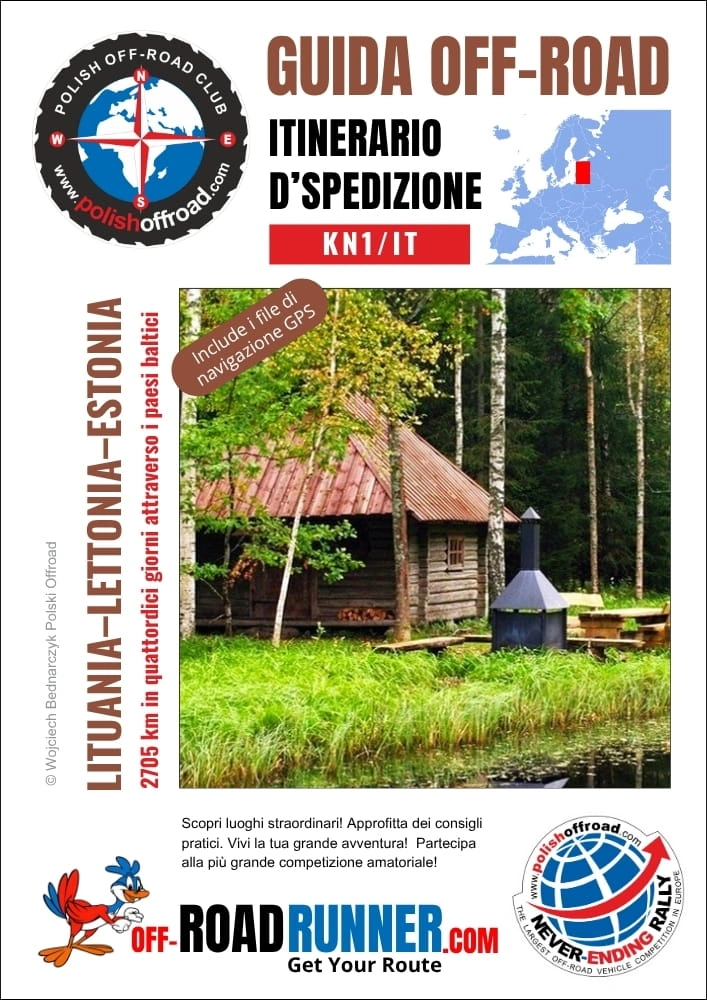
Lithuania-Latvia-Estonia KN1/EN 4×4 Off-Road Route
Route description The Lithuania–Latvia–Estonia off-road route leads through three Baltic countries with a similar character. It includes lowlands, vast forests, lakes, and long straight roads with very little traffic. It is a მშვიდful and uncrowded region, well suited for touring-style off-road travel. The route is approximately 2,705 km long and was planned for 14 days.…
-
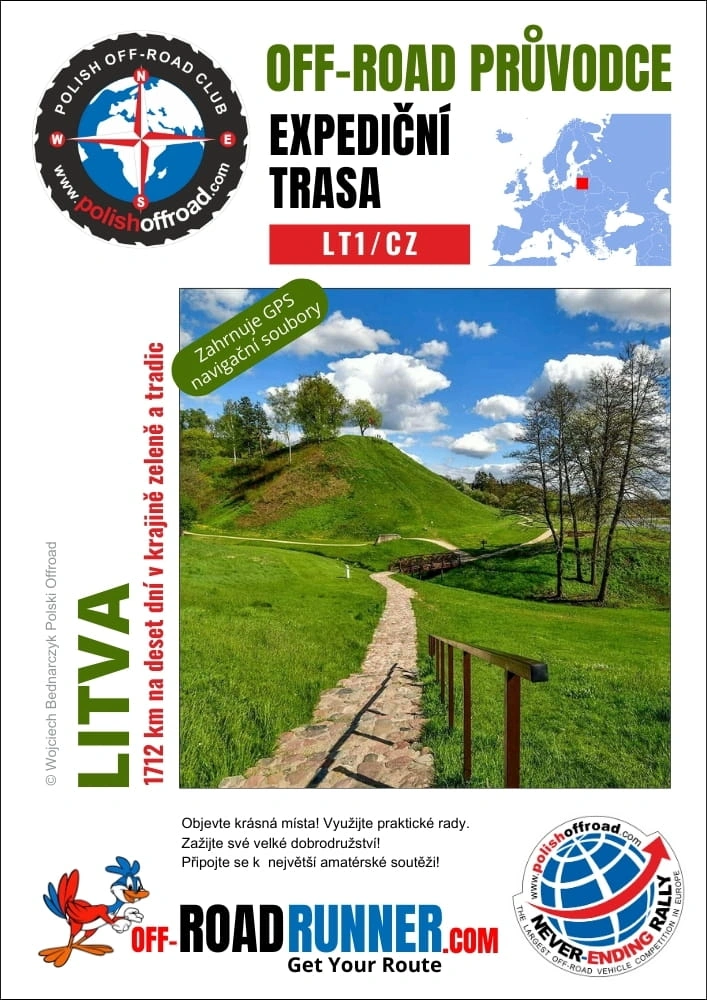
Lithuania 4×4 Off-Road Route
Off-road 4×4 route across Lithuania. 1710 km through forests, lakes and the Baltic coast. Includes GPX, KML and PDF guide.
See also: