

Scotland is one of the most distinctive regions in Europe in terms of landscape. A large part of its area is covered by mountains, moorlands and vast valleys. In many places, open spaces dominate, with few buildings and long stretches of roads leading through wild terrain.
The landscape of Scotland is very diverse. In the north and west there are rugged mountains and rocky Atlantic coastlines, while inland areas are dominated by moorlands, valleys and numerous lakes. A characteristic feature is also the long, winding roads running through the Highlands.
Off-road driving conditions in Scotland
In Scotland, there are many narrow local roads and gravel roads leading through mountainous and rural areas. Some of them are former utility roads or access roads to farms and pastures. In many regions, they run through very vast and sparsely populated areas.
When travelling, it is important to remember that vehicles may only use roads designated for traffic. Driving off-road, especially on moorlands and protected areas, is prohibited. In practice, off-road routes in Scotland involve exploring less-travelled mountain and local roads.
Wild camping in Scotland
Scotland is one of the few places in Europe where very liberal access-to-nature laws apply. Under the so-called “right to roam”, it is possible to use many natural areas, but overnight stays in a vehicle should take place in locations without local restrictions.
In practice, travellers often stay overnight in small bays along mountain roads, in mountain car parks or in places designated for tourists. In many regions, there are also small campsites and parking areas for vehicles.
Information for drivers
Citizens of the European Union can enter the United Kingdom with a valid passport. Drivers should carry a driving licence, vehicle registration document and liability insurance covering the United Kingdom.
In Scotland, traffic drives on the left. This means drivers should exercise particular caution during the first kilometres of driving. On many local roads, there are also very narrow sections with passing places.
Speed limits are usually 30 mph (approximately 48 km/h) in built-up areas and 60 mph (approximately 96 km/h) outside cities. Roads are free of charge and there are no toll stickers or motorway fees. Fuel stations are available throughout the country, but in mountainous regions they may be located further apart.
Price levels in Scotland
Scotland is one of the more expensive regions in Europe in terms of travel costs. Prices for accommodation, fuel and meals in restaurants are usually higher than in Central and Eastern Europe. However, in many smaller towns there are small campsites and parking areas for travellers.
Travel safety in Scotland
Scotland is a safe place to travel by car. Outside major cities, traffic is low and many mountainous regions are very calm and sparsely populated. The main challenges while driving are narrow roads and changing weather conditions.
Basic information about Scotland
- area – approximately 77,900 km²
- population – approximately 5.4 million
- capital – Edinburgh
- currency – British pound
- language – English
Tourist attractions in Scotland
Scotland offers many well-known tourist attractions. The most recognizable include Loch Ness, the Highlands mountain region and the Isle of Skye with its spectacular landscapes. It is also worth visiting the historic cities of Edinburgh and Stirling, as well as numerous castles scattered across the country.
Off-road routes Scotland
-
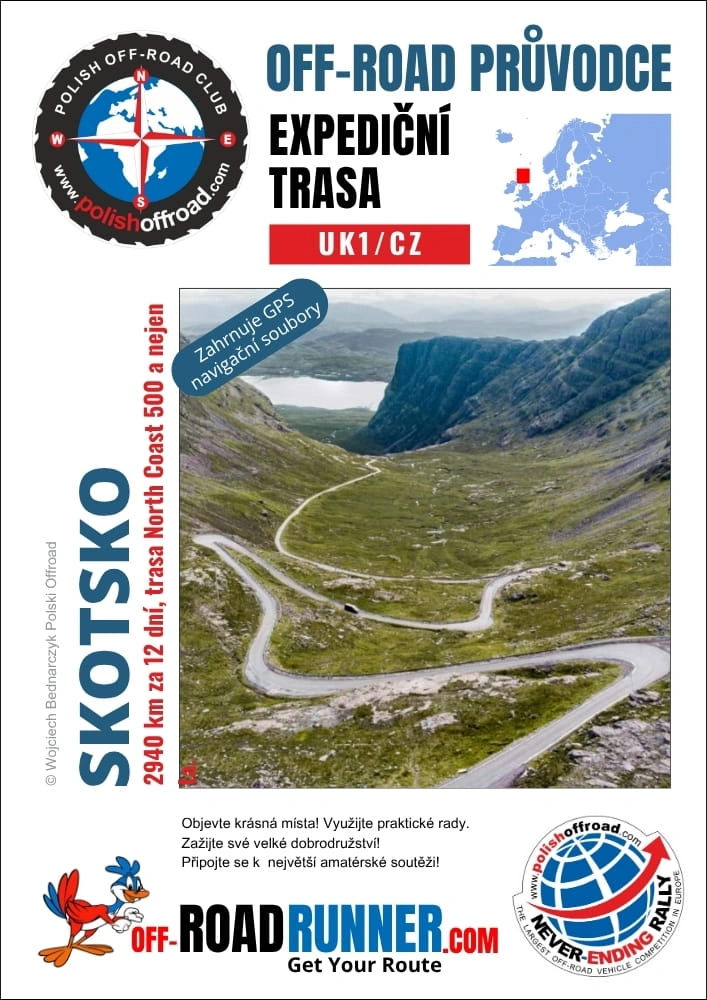
Scotland 4×4 Off-Road Route
2290 km off-road 4×4 route through the Highlands, Isle of Skye and North Coast 500. 12 days of driving, route description and GPS files.
See also: